How Does a Cable Wire Recycling Machine Contribute to Copper Recovery?
A cable recycling machine is a specialised piece of equipment that utilises processes such as shredding, screening and air classification to effectively separate copper and aluminium from the plastic insulation in waste cables. It improves metal recovery rates, reduces labour costs and facilitates the resource recovery of waste cables.
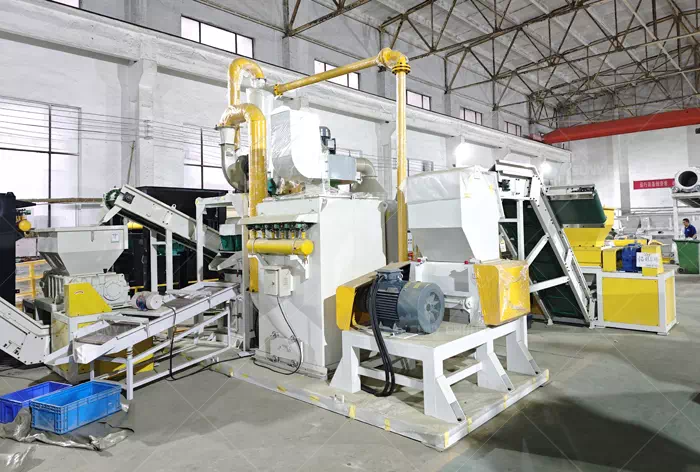
Equipment Composition and Operating Principle
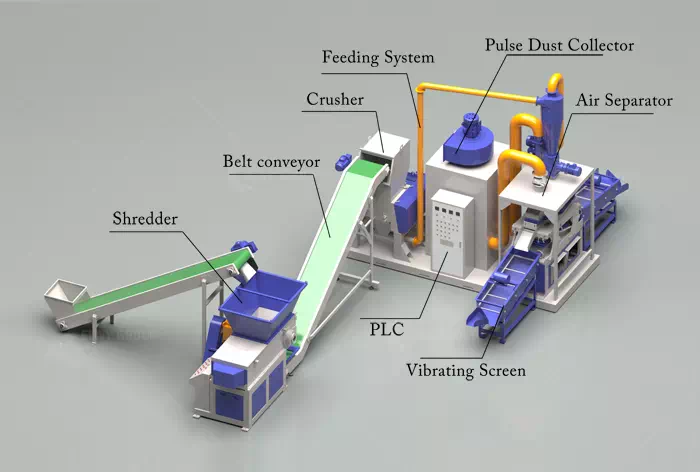
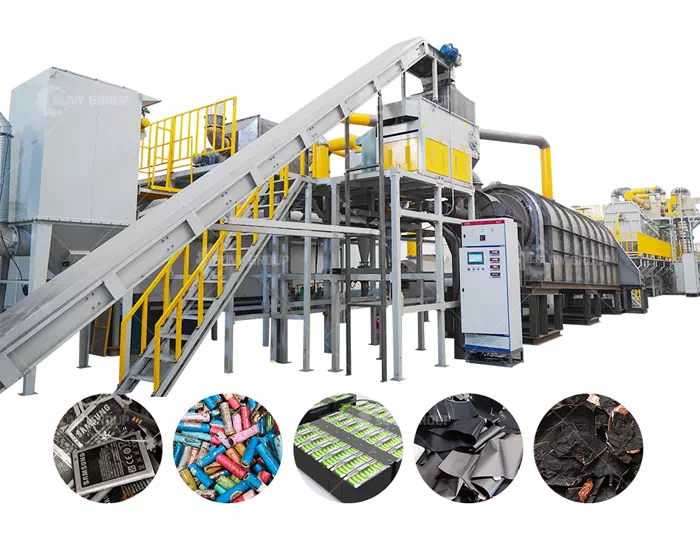
Structural Diagram Of Cable Wire Recycling Machine
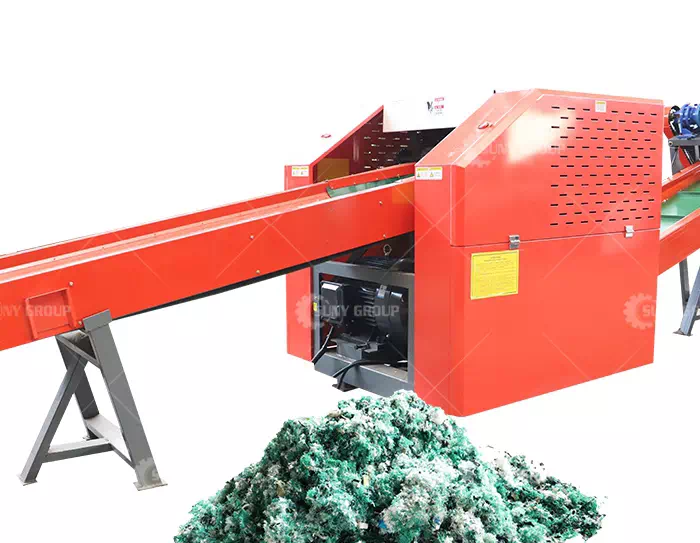
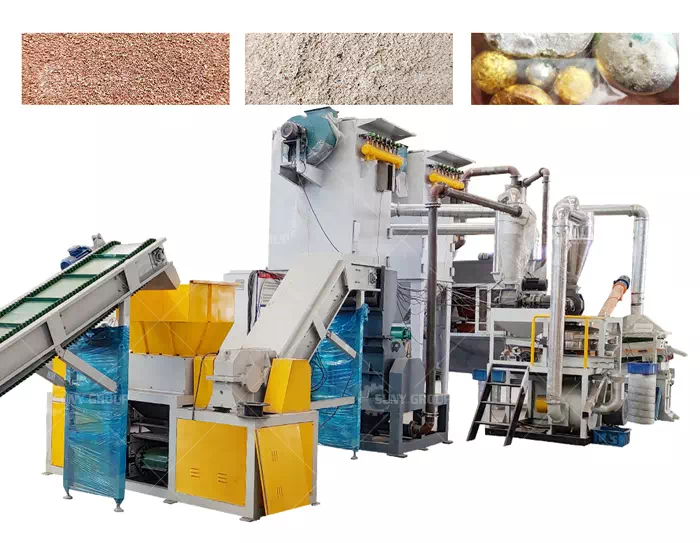
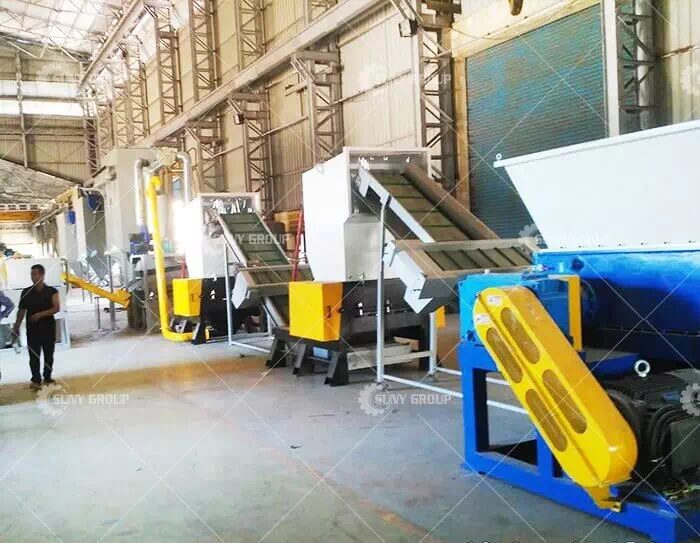
The cable recycling machine primarily comprises a shredding system, a grinding system, a vibrating screening system and an air classification system.
During operation, waste cables first enter the shredding or crushing unit, where they are cut into smaller particles, allowing the copper wires to be thoroughly separated from the plastic sheath. This is followed by high-speed pulverisation, which further disperses the metal and plastic particles. The sorting stage utilises the density differences between copper, aluminium and plastic, employing vibrating screens and air classification technology to separate them, ultimately yielding metal and plastic particles of high purity.
Some large-scale cable recycling production lines are also equipped with magnetic separation equipment, dust extraction systems and automatic conveying devices to enhance production continuity and workplace safety.
The Impact of Equipment Performance on Recycling Efficiency
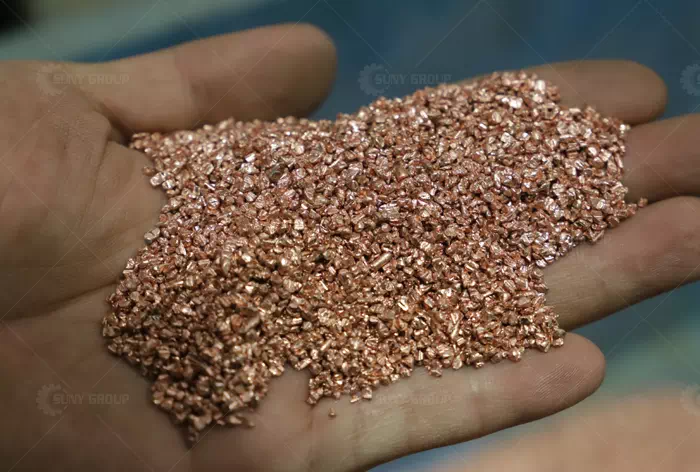
High-purity Copper Granules
With a properly configured copper granulator and sorting system, the efficiency of copper-plastic separation can typically reach a high level, with the separated copper particles able to proceed directly to subsequent smelting or processing stages (with a separation rate of 99 per cent or higher). Compared to traditional wire stripping methods, mechanised processing not only reduces labour input but also enables the processing of a wide range of materials, including telecommunications cables, automotive wiring harnesses, power cables and mixed waste cables.
Furthermore, modern cable recycling equipment generally employs PLC-based automatic control systems, which allow for the adjustment of feed rates, operating status and equipment parameters, thereby enhancing operational stability. The dry separation process requires no water or chemical agents, minimising wastewater treatment issues and making it more suitable for long-term industrial production.
Environmental and Economic Benefits of the Equipment
From an environmental perspective, cable recycling machines reduce the volume of waste cables sent to landfill, enabling the recycling of metal resources such as copper and aluminium.
Once separated, the plastic insulation can also be used as raw material for recycled plastic, thereby preventing the emission of harmful gases that would result from incineration. The entire recycling process relies primarily on physical separation and does not require burning or stripping, aligning with the development trends of modern green recycling.
For businesses, cable recycling machines are not merely a set of processing equipment, but rather a system for adding value to resources. Through the automated processing of waste wires and cables, both copper and plastic—two usable resources—can be recovered simultaneously, thereby increasing the added value of waste materials and establishing a stable revenue model for recycling.
Recommend products

CONTACT US:
If you have any requirement or suggestion, please fill in the form and send to us, thanks!E-mail:[email protected] | Whatsapp:+8613674945231