Li Ion Battery Recycling Process and Equipment for EVs
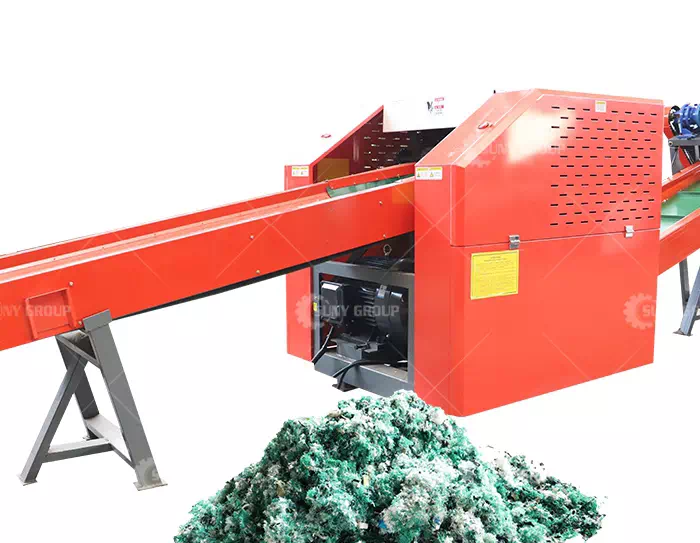
Given the complex structure and high energy density of power lithium batteries in new energy vehicles, SUNY GROUP's lithium battery recycling equipment centers on “safety and stability + high-value recovery.” The first step is the nitrogen protection system, which creates an inert environment throughout the crushing process to prevent thermal runaway, combustion, and other risks during mechanical stress. Batteries then enter the lithium battery shredder, which safely pulverizes battery modules, PACKs, or entire packs using low-speed, high-torque methods to achieve the appropriate particle size for subsequent material separation.
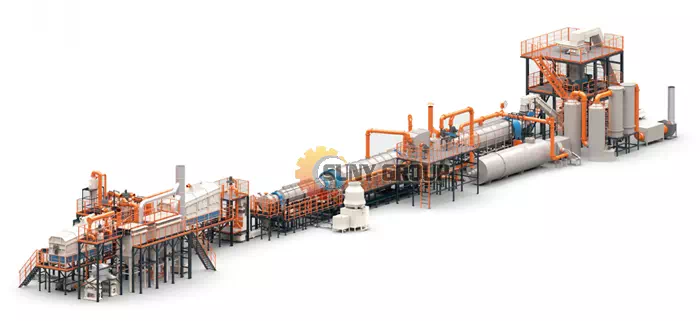
Lithium Battery Recycling Machine Structure Diagram
After pre-shredding, batteries enter the core temperature-controlled equipment—the pyrolysis furnace. High-temperature pyrolysis thoroughly separates internal components like electrolyte and organic binders while decoupling cathode/anode materials from copper/aluminum structural components, forming a mixture ready for further sorting. Through precise temperature and atmosphere control, pyrolysis achieves high efficiency without secondary pollution. Exhaust gases undergo centralized treatment via a dedicated purification system, ensuring emissions meet regulatory standards.
Multi-stage Sorting System: Precise Recovery of Black Powder, Metals, and Housing Materials
Pyrolyzed materials proceed to the battery housing separation system. Through screening, magnetic separation, and mechanical separation, structural components like steel and aluminum casings are rapidly disassembled. Metals recovered at this stage exhibit high purity and can proceed directly to metal recycling plants.
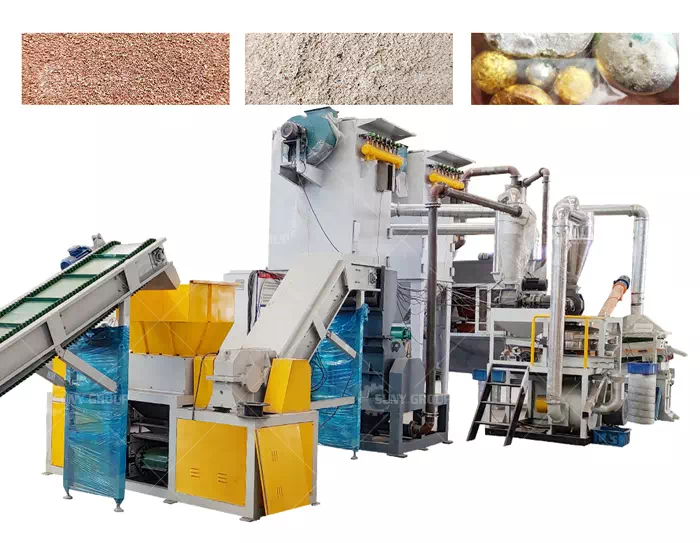
Subsequently, the material enters the black powder separation stage. The primary black powder separation system employs air classification technology to preliminarily separate lightweight materials like carbon powder and binder powder from high-value cathode and anode black powder. The black powder collection system ensures stable material transport to the secondary separation unit. The second black powder separation system further enhances purity, enabling efficient separation of cathode black powder (containing lithium, nickel, cobalt, manganese, etc.) from anode graphite materials. This provides high-quality feedstock for downstream hydrometallurgical extraction or material reprocessing.
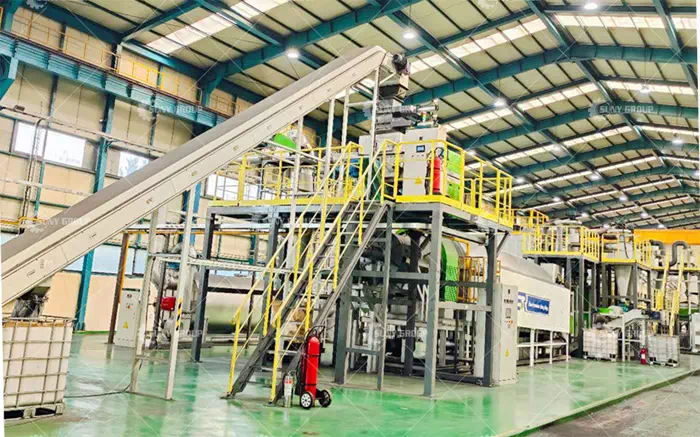
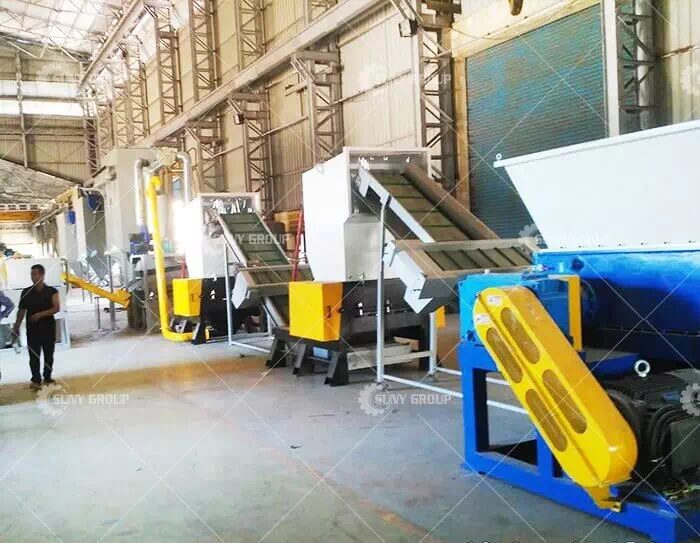
Customer's Lithium Battery Recycling Line Site
Copper-Aluminum Separation and Exhaust Gas Purification: Delivering Long-Term Stability for Large-Scale Processing
Following black powder processing, the mixed crushed material undergoes further metal purification through the copper-aluminum separation system. This achieves stable separation of copper foil and aluminum foil with high precision and minimal loss. All exhaust gases containing organic compounds or dust are centrally treated by the exhaust gas purification system. Through condensation, adsorption, and filtration, emissions meet regulatory standards, ensuring long-term stable operation of the entire line under environmental oversight.
The entire production line maintains a stable processing capacity of 1 ton per hour, suitable for various new energy power lithium batteries, including ternary batteries and lithium iron phosphate batteries. Featuring high automation and comprehensive safety measures, it represents a proven choice for large-scale power battery recycling enterprises.
For detailed specifications, process quotations, or factory layout plans regarding electric vehicle power lithium battery recycling equipment, please feel free to contact us at any time.
Recommend products

CONTACT US:
If you have any requirement or suggestion, please fill in the form and send to us, thanks!E-mail:sunymachine@gmail.com | Whatsapp:+8613674945231